Rosemary oil is the internet's favorite beard growth hack right now. Here's what the actual evidence says, how it compares to minoxidil, and if it's worth trying.
Every few months the internet discovers a new "natural minoxidil" and right now it's rosemary oil. Scalp hair influencers swear by it, and the claim has drifted straight into beard forums. So let's check it against the actual research instead of a testimonial. From neck to nuts, here's what rosemary oil can and can't do for your beard.
If you haven't read the Beard Growth Timeline: What to Expect Month by Month yet, start there. A lot of guys reach for a new oil in week 3 when the real issue is that beards take 90 days no matter what you rub on them.
Does rosemary oil actually grow a beard?
Maybe, modestly, and nobody has actually tested it on beards. The claim comes entirely from a scalp hair study, not facial hair research. Rosemary oil shows real promise for scalp regrowth in men with pattern thinning. Whether that holds up on a beard is an assumption, not a finding, and assumptions are not receipts.
Where does the rosemary oil beard growth claim come from?
One 2015 study, and it's about scalp hair. Researchers compared rosemary oil to 2% minoxidil in men with androgenetic alopecia over six months and found a similar increase in hair count, with less scalp itching in the rosemary group. That's a legitimate, useful result. It is also the only study doing the heavy lifting behind every "rosemary oil beard growth" claim online, and it never touched a single beard.
How is rosemary oil supposed to work on hair follicles?
The leading theory is better local circulation plus carnosic acid acting as an antioxidant and mild anti-inflammatory around the follicle, similar in spirit to how minoxidil widens blood vessels. It's a plausible mechanism, not a confirmed one for facial hair. Compare that to minoxidil, which has a dedicated beard study behind it. Rosemary oil is working off a borrowed mechanism from a different body part.
Is rosemary oil as effective as minoxidil for a beard?
Probably not, and there's no beard-specific trial to say otherwise either way. The scalp study put rosemary oil roughly on par with 2% minoxidil for thinning scalp hair, but a thinning scalp follicle and a beard follicle that never grew in are different problems. If your beard is genuinely patchy rather than thinning, rosemary oil is an unproven long shot where minoxidil has actual beard data behind it.
Product pickLight, all-natural beard oil. If you want to try rosemary oil, the easiest path is a beard oil blend that already includes it, pre-diluted and safe for facial skin, instead of experimenting with pure essential oil.
Is rosemary oil safe to use on your face?
Only if it's diluted. Pure rosemary essential oil is strong enough to irritate or burn skin, and your face is more sensitive than the scalp the original study used. Mix it into a carrier oil (jojoba, argan, or a pre-blended beard oil) at a light concentration, patch test on your forearm for 24 hours first, and stop if you see redness or breakouts. This is a kitchen-cabinet remedy, not a free pass to skip basic skin sense.
How do you actually use rosemary oil for beard growth?
Buy it pre-diluted in a beard oil, or mix a few drops of rosemary essential oil into a carrier oil yourself (aim for well under 5% concentration).
Patch test on your inner forearm for 24 hours before putting anything on your face.
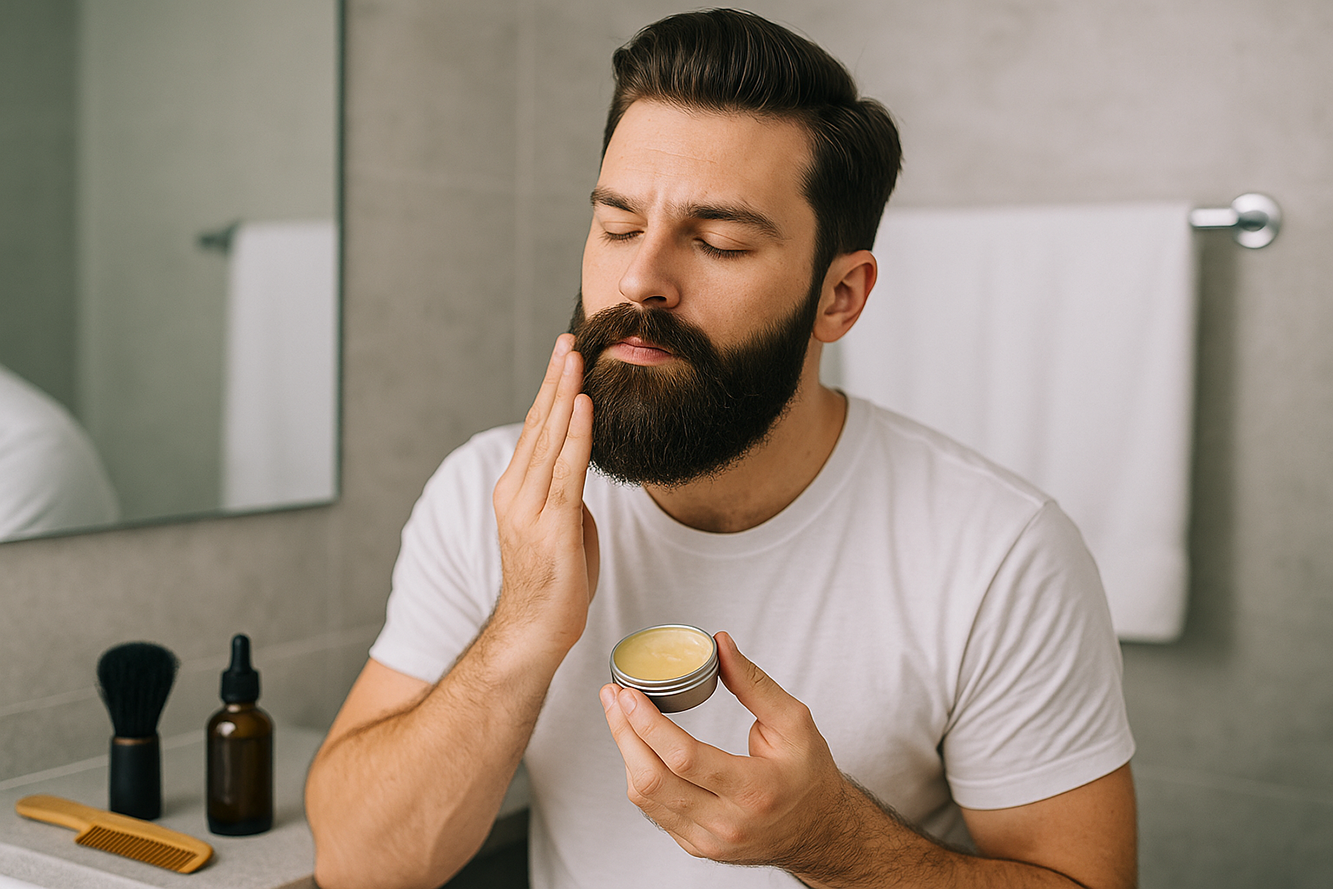
Massage it into the skin under the beard once daily, same as you would any beard oil.
Give it the same 90-day runway you'd give anything else. One week tells you nothing.
Track whether your skin stays calm, not just whether hair shows up. Irritation undoes any benefit.
Product pickPrecision trimmer. Whatever oil you use, a clean edge is what actually makes new growth look deliberate instead of accidental.
Is rosemary oil worth trying for your beard?
As a low-cost, low-risk add-on to a routine you're already running, sure. As a replacement for minoxidil if your beard is genuinely sparse, no. It's cheap, it probably won't hurt you if diluted properly, and the worst realistic outcome is a beard oil that smells like your grandmother's kitchen and does what beard oil already does: keep the hair you have from looking dry and scraggly while genetics and time do the actual work.
The honest playbook
Rosemary oil has one real study behind it, and it's about scalp hair, not beards. Treat the beard growth claim as a plausible extrapolation, not a proven result. If you want to try it, use it diluted, patch test first, and judge it the same way you'd judge anything else: 90 days, consistent use, realistic expectations. If your real problem is genetics or patience, a bottle of rosemary oil was never going to out-argue your DNA.
Your follicles don't care what's trending. They care about time, hormones, and whether you kept irritating your face in the meantime.